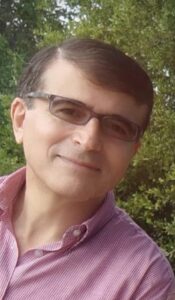
A Franco-Lebanese philosopher of plural cultural allegiance, he is the author of around forty works published in Lebanon and France. He holds a doctorate in philosophy (France, Germany) and a degree in religious studies (Lebanon). He is Professor of Philosophy at the Lebanese University (Beirut), where he teaches the history of German philosophy and hermeneutics. His research focuses particularly on interculturality, the relationship between philosophy and theology, and the status of hermeneutical reason in understanding the diversity of the religious phenomenon.
Academic Background
Professor Mouchir Aoun comes from a family originally from the northern Bekaa Valley (Jdeideh). He grew up in Zahle, the administrative capital of the Bekaa and one of Lebanon's foremost gastronomic centers. After completing his secondary studies, he entered the Saint-Paul Seminary (Harissa, Lebanon), where he finished his secondary education and obtained his baccalaureate (with a specialization in philosophy). From 1982 to 1987, he pursued courses in philosophy and theology at the Institut Saint-Paul de Harissa (Lebanon). Holding an advanced studies diploma (DEA) in philosophy from the Lebanese University, he left Lebanon in 1990 to enroll at the University of Caen (Normandy) in a doctoral program, where he wrote a dissertation in German philosophy (The Heideggerian Polis as a Site of Reconciliation between Being and the Political). After defending his thesis in 1994, he returned to Lebanon to teach philosophy and engage with the complex question of Islamic-Christian dialogue. In collaboration with Professor Adel-Theodor Khoury, he co-founded the Research Center for Islamic-Christian Dialogue (CERDIC) in Harissa (Lebanon) and directed it for two years. After several years of commitment to the Paulist Missionary Society (Harissa, Lebanon), he withdrew from community life and devoted himself to university teaching and research. In 1997, he spent a year in Germany, after which he moved to Belgium and settled near the Catholic University of Louvain-la-Neuve, where he pursued post-doctoral research in the field of interculturality. Since 2002, he has resided permanently in Lebanon, teaching German philosophy and hermeneutics at the Lebanese University (Faculty of Letters II).
An Outline of His Philosophical Conception
In an age of interculturality, Mouchir Aoun endeavors to construct a new paradigm of thought capable of grounding universal diversity. Far from any ideological appropriation, the aim is to show that being expresses itself in a plural manner from the very moment of its emergence. Even if there is no intelligible access to any primordial beginning or foreseeable end, there is reason to think that the nature of being's own unfolding is inherently favorable to this originary diversity. Hence the necessity of interrogating the multiple modes through which this diversity comes about, whether at the level of lived human experience or at the level of cultural expression. It is precisely in this that the philosophical project pursued by this thinking of openness and interculturality consists. A privileged place is therefore reserved for the questioning of planetary religious experience in the full breadth of its cultural richness.
In this regard, Mouchir Aoun seeks to cultivate a plural vision of life, grounded in the unfathomable mystery of the ceaseless unfolding of being within the manifestations of humanity's historical existence, both individual and collective. Far from any ideological alignment, he opts for a humanist thought that is critical in its questioning and responsible in its openness. Hence the particular status of belonging — a fundamental category conceived as a site of convergence for all interrogations and challenges to unjust practices of identity. This demand for lucidity does not prevent him from aligning himself with an intercultural humanism open to all tests of spiritual authenticity, in which the human being creates and re-creates itself through gestures of compassion and solidarity. While remaining wary of closed religious systems and ideological immobility, Mouchir Aoun continually promotes a philosophical and spiritual ethics capable of allowing both rationality and affectivity to jointly orient human action.
The primary concern of the thinking advocated by Mouchir Aoun is to account for the intelligibility inherent in reality — that of the external world and the universe, as well as that of individual and collective consciousness. If this intercultural thinking ventures to interrogate the ultimate ground of such intelligibility, it nevertheless refuses to establish any new form of metaphysical rupture within reality itself. While maintaining the dimension of openness inscribed in the unfolding of human historical existence, it refrains from any thematic assignation that would exceed the principle of human finitude. The question nonetheless remains fully open as to whether the various historically and culturally situated practices of rationality are capable of establishing a credible consensus regarding the ultimate meaning of life. The only intelligible way forward would be to allow human beings to express their quest for meaning in full respect of the fundamental rights of the human person. The plurality of paths toward inquiry and happiness thus seals not only the finitude of human historical existence, but above all the condition of openness and transcendence that is inherent to the constitution of the human being.
In this connection, he proposes a new theory of human meaning and intends to build it on the foundation of a triple cultural inscription of that meaning: obligatory inscription within the sphere of the fundamental values of human rights (human meaning as required by the demands of rationality); desirable inscription within the sphere of spiritual ideals (human meaning as suggested by the power of bringing humanity's humanity to its fullest completion); and optional inscription within the sphere of religious life linked to the experience of the divine (human meaning as hoped for in its dimension of absolute transcendence). The governing principle that orders the relationship of dependence among these three spheres requires that human beings subject the ideals of the second sphere and the theological conceptions of the third sphere to the fundamental demands of the first sphere — such that no spiritual ideal and no theological truth may contradict the principles of the first sphere (dignity, equality, freedom, justice, etc.).
Within the human city, only a gentle and open secularism is capable of bearing responsibility for such a plural openness to the ultimate meaning of life. This is why the competing worldviews currently confronting one another within our societies shaped by globalization will need to rethink their rival claims to the absolute. Whether it is totalitarian ideologies or religious systems, the motif of plurality must be introduced as a corrective element into every process of reconstruction and understanding of one's own identity.